News Feed
Loading...
Loading...
Loading...
Loading...
Loading...
Loading...
Loading...
Loading...
Loading...
Loading...
News Feed
ChaiViz
24.07.2026
Something significant is happening to the CS2 skin economy. Prices are falling across the board, and unlike previous downturns, there is no single obvious cause. Knives, butterfly skins, gloves, and play skins alike are all sliding in value simultaneously, pointing to a broader crisis of confidence rather than a specific market correction.
For players who want to stay up to date on CS2 news and what it means for the community, Gocore covers the CS2 scene as it develops.

The gold trade-up update sits at the center of the current mood. Before that update landed, CS2's skin economy operated on a reliable premise: buy a knife for a few hundred dollars, play with it, and expect to sell it later for roughly the same amount or slightly more. Prices trended slowly upward over time, making skins a practical near-stable asset for players who enjoyed them in-game. That expectation gave the CS2 economy its unique appeal compared to other games. Players were not just buying cosmetics; they were buying items that held real-world value.

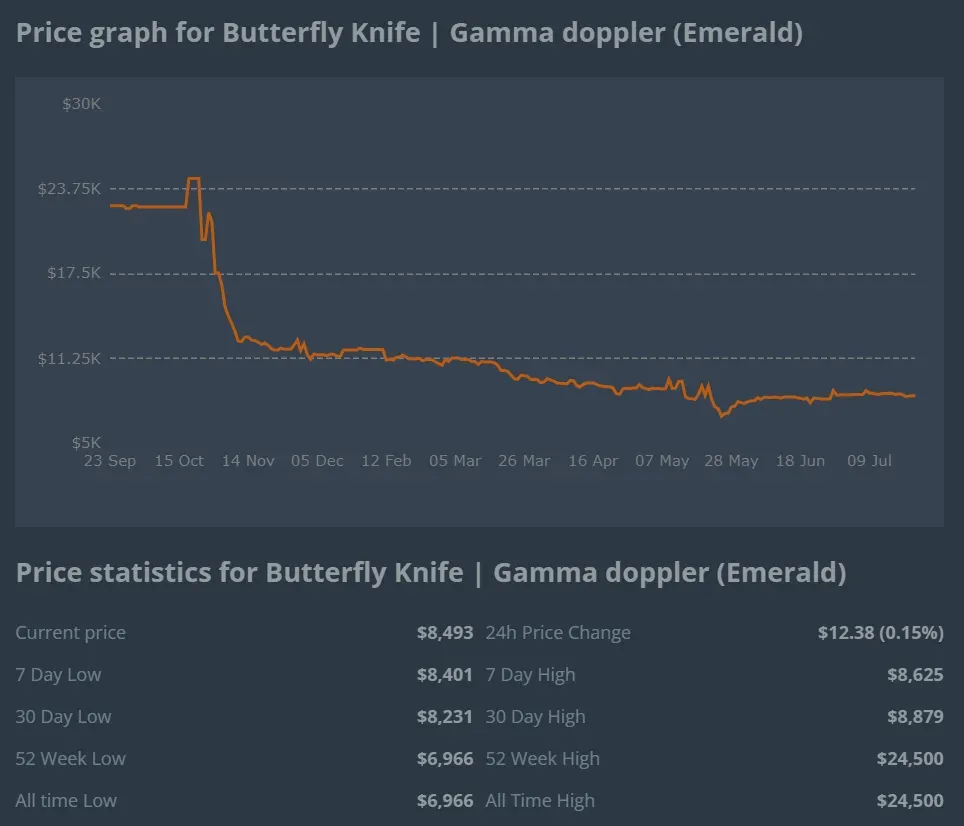
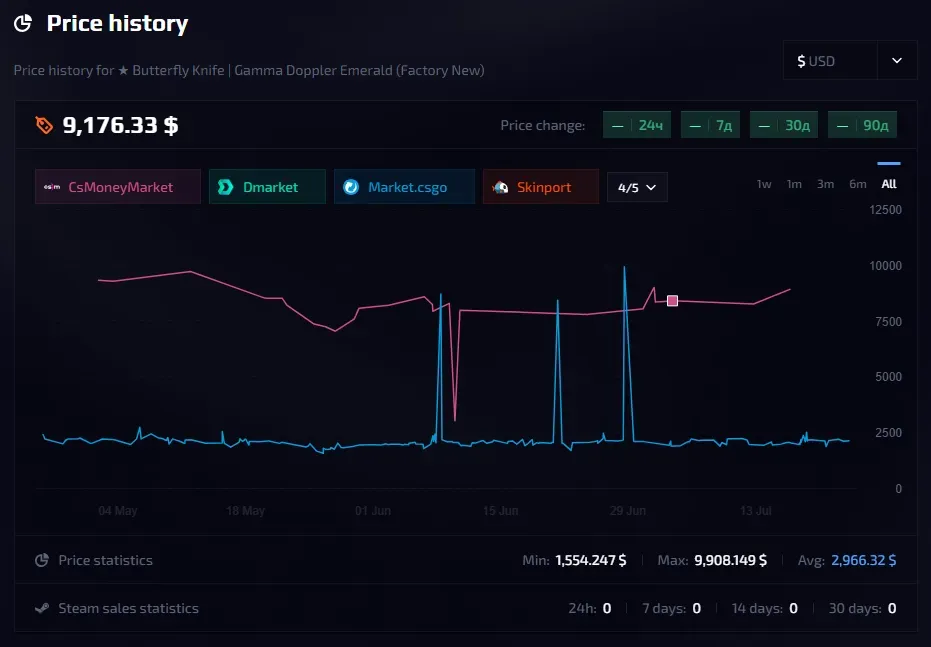
The trade-up update changed that dynamic. Players holding high-value items at the time of the update saw prices fall sharply. A Butterfly Emerald that had been sitting at around $20,000 in value began a steady decline that has continued. Importantly, the damage landed hardest on ordinary players rather than dedicated traders.
Traders who built their operations around CS2's economy could absorb and adapt. Regular players who had bought a knife, some play skins, or a glove with personal money had no such cushion. That is the group the market shift hit most directly, and the loss of confidence among that segment appears to be contributing to broader selling pressure.
The trade-up update is not the only factor at play. The CS2 player base has been growing for six consecutive months, which would ordinarily signal rising demand and higher prices. Instead, the market is declining while the player base grows. The disconnect points to something structural breaking down beneath the surface.
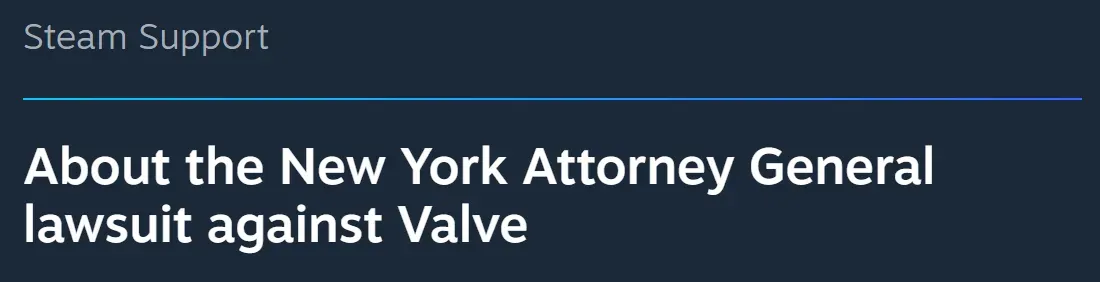
Legal pressure on Valve is one compounding factor. Multiple lawsuits are ongoing, and regulatory scrutiny in both the EU and China is intensifying around loot box mechanics and digital gambling systems. These two regions represent a significant portion of the CS2 community. If Valve loses legal ground, one possible outcome is converting every existing case into a terminal. That would eliminate the key-based secondary economy that cases currently support and could further undermine the value of case stockpiles that players have built up.
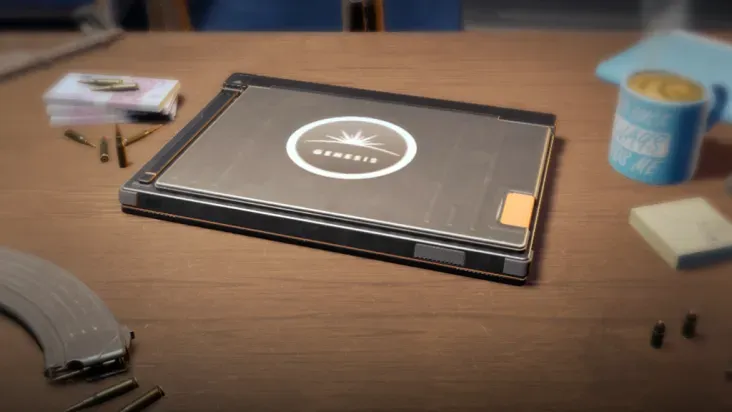
The shift toward terminals is already changing how players interact with the skin market. Terminals require direct purchases rather than key openings, removing a trading layer that supported the broader economy. The knock-on effect is that players who might previously have invested in cases as a longer-term hold are now uncertain about what that investment is worth.
Valve's position in all of this is worth noting. The company earns a cut from every marketplace transaction regardless of whether prices rise or fall. There is an argument that lower prices actually increase transaction volume, creating more individual sales even if each sale is worth less. That structural dynamic means Valve does not have a direct financial incentive to protect the investment value of player holdings. Whether community pressure or legal outcomes change that calculus remains unclear.
Behavioral changes among active skin holders are becoming visible. Players who previously felt comfortable holding items for months or years are now looking to sell as quickly as possible after purchases. The logic is simple: if a Valve update can significantly devalue an entire skin category overnight, holding any item long-term carries meaningful financial risk. The old informal guarantee that items would hold value is no longer reliable.

The comparison to Valorant's cosmetics model has entered community conversations more seriously as a result. Valorant skins carry fixed purchase prices with no resale value. Players never profit from them, but they also never lose money after buying. CS2's system had long been considered superior because of its genuine resale potential. That advantage is shrinking as the market becomes harder to predict, and for some players, the certainty of no loss is beginning to outweigh the possibility of gain.
ChaiViz
24.07.2026
Article TAGS